
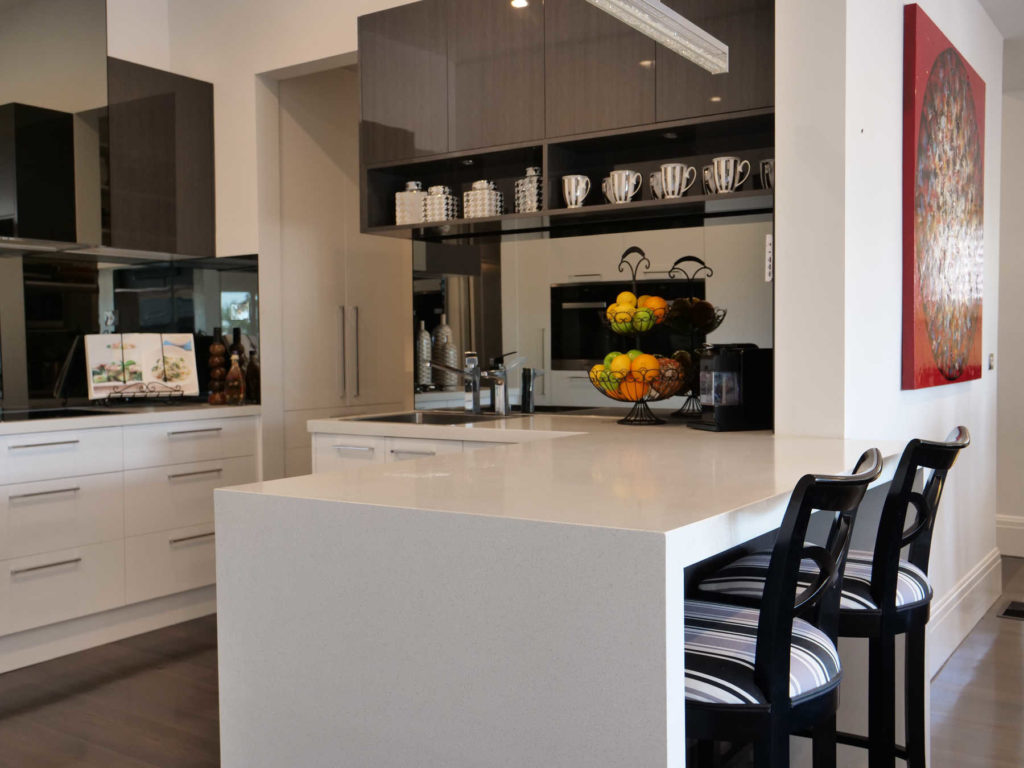
Picture this: you have just finished a kitchen redesign. The countertops are gleaming, the paint is fresh, and everything looks exactly as it did in the mood board. Then you open the dishwasher door and it slams straight into the oven handle. The new island, which looked perfect on the floor plan, creates an immediate bottleneck between anyone standing at the fridge and anyone trying to reach the sink. And within a couple of months, the cabinet doors are beginning to sag because they were not built to withstand the conditions of a working kitchen.
Kitchen redesign sit at the expensive end of the home improvement spectrum for good reason: they involve plumbing, electrical work, joinery, appliances, and a level of structural commitment that most other rooms do not. When something goes wrong, the cost of putting it right is rarely modest. Labour alone accounts for a substantial proportion of most kitchen renovation budgets, and mistakes that require completed work to be undone and redone mean paying for that labour twice. The good news is that the vast majority of the most costly kitchen mistakes are entirely avoidable with the right planning from the outset.
Why kitchen mistakes are more expensive than they look
Kitchen interior design errors rarely travel alone. A single miscalculation in cabinet measurements can cascade into adjustments to the plumbing, unexpected changes to the electrical layout, and wasted materials that cannot be returned. A layout that looked workable on paper but fails in practice may require structural changes that were not in the original scope or budget. And a kitchen that does not function well is not simply frustrating to live with. It can also affect the value of the property when it comes time to sell, becoming a liability rather than the asset a well-executed renovation should be.
The pattern the studio sees repeatedly is homeowners who spent heavily on the visible elements of their kitchen and then discovered that the invisible decisions, the ones made early in the planning process about layout, storage, ventilation, and material quality, were the ones that determined whether the renovation was a success. Getting those decisions right from the beginning is the most reliable way to protect the investment the renovation represents.
Budget planning mistakes that derail renovations
Not building in a contingency
Prioritising style over structure
The most expensive mistake in material selection is choosing cabinetry or surfaces based on appearance without sufficient regard for how they will perform over years of daily use. Cabinetry built on particleboard rather than solid plywood will show its limitations within a relatively short time in a kitchen environment that involves heat, moisture, and regular physical contact. Laminate surfaces that looked attractive in the showroom can deteriorate in ways that are difficult and costly to address without replacing the whole surface.
The more reliable approach is to invest in the structural components first: quality cabinet carcasses, durable hinges and drawer runners, and surfaces that can genuinely withstand the conditions of a working kitchen. The decorative elements, the hardware, the splashback, the lighting fixtures, are the ones most easily updated or replaced later without major disruption. Spending heavily on what is difficult to change and more carefully on what is not is a principle that consistently produces better outcomes.
Underestimating the true scope of costs
Many homeowners approach a kitchen renovation with a clear picture of the material costs and a hazier picture of everything else: professional labour, permits and compliance, debris removal, and the cost of setting up a functioning temporary kitchen during the build. These are not minor additions. Labour alone is typically the largest single line item in a kitchen renovation budget, and failing to account for it accurately at the planning stage produces a budget that bears little relationship to the final invoice.
Getting itemised quotes from at least three contractors before committing to any scope of work is the minimum due diligence required. Equally important is the double-measure rule: always verify dimensions with a professional before ordering any materials, because incorrect measurements are one of the most common and most expensive sources of wasted spend in kitchen renovations.
Layout errors that make a kitchen genuinely unpleasant to use
Ignoring the working triangle
Poor traffic flow and congestion points
Islands positioned too close to appliances or walls create pinch points that are frustrating to navigate when one person is cooking and another is moving through the kitchen simultaneously. A minimum clearance of approximately 42 inches around islands and major workstations is a widely accepted guideline, and deviating from it significantly is a decision that will be felt on every occasion the kitchen is occupied by more than one person at a time.
Appliance door swings are one of the most consistently overlooked sources of layout failure. A dishwasher door that opens into the path between the sink and the main preparation area, or an oven door that collides with an island corner, can render a kitchen genuinely difficult to use in ways that no amount of aesthetic quality will compensate for. The simplest and most effective way to test for these conflicts before installation is to mark out the proposed layout on the floor with painter’s tape and physically walk through every sequence of tasks the kitchen will need to support, including opening every door and drawer at its full extent.
Neglecting the preparation zone
A disproportionate amount of kitchen design attention goes to appliance selection and joinery specification, and a disproportionately small amount goes to the question of where food will actually be prepared. A kitchen with beautiful appliances and insufficient continuous bench space for chopping, staging, and assembling a meal is a kitchen that will frustrate its occupants from the first time they try to cook a proper dinner in it. At a minimum, a continuous counter run of around 36 inches dedicated to daily preparation is what most households actually need, and more is rarely a disadvantage.
Functional mistakes with long-term consequences
Treating lighting as an afterthought
A single ceiling fixture is not a kitchen lighting scheme. It is a starting point that leaves most of the work undone. A kitchen that relies on overhead ambient light alone will have shadows falling across preparation surfaces, insufficient visibility in key task areas, and an atmosphere in the evening that is neither warm nor particularly functional. Kitchen lighting works best when it is designed in three layers: ambient light for overall room illumination, task lighting directed at the specific areas where work happens, and accent or decorative lighting that contributes to atmosphere and visual interest.
The critical detail is that lighting needs to be planned before the electrical rough-in phase, not after. Adding under-cabinet task lighting or additional circuits once the walls are closed is significantly more disruptive and expensive than designing for them from the outset. LED under-cabinet strips are an efficient and effective task lighting solution that is well worth specifying early in the design process.
Underestimating storage needs
Standard cabinetry configurations waste more usable volume than most homeowners realise. Upper cabinets that do not extend to the ceiling leave dead space that collects dust rather than serving any useful purpose. Corner cabinets in a traditional configuration can be almost impossible to use effectively. Lower cabinets with a single shelf and a cavernous space below it are significantly less useful than deep drawers that allow the full contents to be accessed without crouching and reaching.
The most effective approach to kitchen storage design is to audit what actually needs to be stored before designing the cabinetry around it. How many pots and pans does the household use regularly? What small appliances are used daily versus occasionally? How large is the pantry inventory? Building the storage around real answers to these questions produces a kitchen that functions as a working space rather than one that runs out of practical storage within the first few weeks of use and pushes the overflow onto the very bench surfaces the renovation was intended to keep clear.
Neglecting ventilation
A recirculating range hood that filters air and returns it to the kitchen is not adequate ventilation for a household that cooks regularly. Proper kitchen ventilation requires a hood that extracts air directly to the exterior, removing moisture, grease, and cooking odours from the space rather than processing and recirculating them. The consequences of inadequate ventilation accumulate gradually: moisture absorbed into cabinetry, odours that penetrate surfaces and are difficult to remove, and eventually the kind of mould and material damage that requires significant remediation work to address.
Sizing the range hood correctly for the cooktop output is as important as specifying the right type. Industry guidance generally recommends a minimum of 100 CFM of extraction capacity for every 10,000 BTUs of cooking output. For most domestic cooktops, this translates to a range hood in the 250 to 600 CFM range depending on the specific configuration and the volume of the kitchen. Under-specifying the hood to save money at the installation stage is a decision whose consequences tend to become apparent over the medium term in ways that are both unpleasant and expensive to address.
When DIY costs more than the professional alternative
The appeal of managing certain parts of a kitchen renovation independently is understandable, and there are areas where a capable homeowner can genuinely contribute without creating problems. Basic demolition, painting, and the installation of straightforward elements are reasonable candidates for self-completion. Plumbing rerouting, electrical work, gas line modifications, and anything that touches the structural elements of the kitchen are not.
Code violations discovered during a property sale inspection have the capacity to derail the transaction entirely and require professional remediation before it can proceed. Unpermitted work creates legal and insurance complications that extend well beyond the inconvenience of the original decision. The apparent saving at the time of installation is rarely the full picture once the downstream consequences are factored in. Knowing clearly which tasks require licensed professionals and which do not is one of the most practically important things a homeowner can establish before a kitchen project begins.
A five-point checklist for avoiding the most costly mistakes
- Budget verification: build a contingency of ten to twenty percent into the total budget and obtain at least three itemised contractor quotes before committing to any scope of work
- Layout mock-up: use painter’s tape on the floor to map the proposed positions of appliances, islands, and cabinetry, and walk through every task sequence the kitchen needs to support, testing all door and drawer swings at full extent
- Lighting plan: design all three layers of kitchen lighting, ambient, task, and accent, before the electrical rough-in phase, and specify the circuit positions and switch locations at the same time
- Storage audit: inventory everything that needs to be stored in the kitchen before the cabinetry is designed, and build the storage configuration around the actual inventory rather than a generic showroom template
- Professional review: regardless of how much of the project will be self-managed, have a designer or experienced contractor review the layout before anything is ordered or installed
Where to spend and where to save
Where to invest without compromise
Where to spend more carefully
Protecting the investment a kitchen renovation represents
The compounding nature of kitchen design mistakes is what makes them so costly. A poor layout decision does not simply create one problem. It creates a sequence of them, each flowing from the last, each adding to the remediation cost and the disruption required to put things right. The investment in thorough planning at the beginning of a kitchen project, including professional design input where it is available, is almost always recovered many times over in the problems it prevents.
A kitchen that has been designed carefully, with the working triangle respected, the storage built around real needs, the lighting planned in layers, the ventilation specified correctly, and the materials chosen for their performance as much as their appearance, will function well for many years and contribute positively to the value of the property it is part of. That outcome is available to any homeowner willing to do the planning work that makes it possible.
The real cost of the most common mistakes
- Inadequate ventilation: mould, moisture damage, and eventual remediation work that could have been entirely avoided with correct specification at installation
- Incorrect measurements: cabinetry and surfaces ordered to the wrong dimensions that cannot be used and cannot be returned, requiring replacement at full cost
- Unpermitted or non-compliant work: professional remediation required before a property sale can proceed, at whatever the current market rate for that work happens to be
As one experienced kitchen designer put it: the pattern is consistent. A household spends significantly on a kitchen renovation and then spends again within the first year correcting layout mistakes that proper planning would have prevented entirely. The up-front investment in getting the design right is a fraction of what the corrective work costs, and unlike the corrective work, it does not involve living through a second round of disruption.