
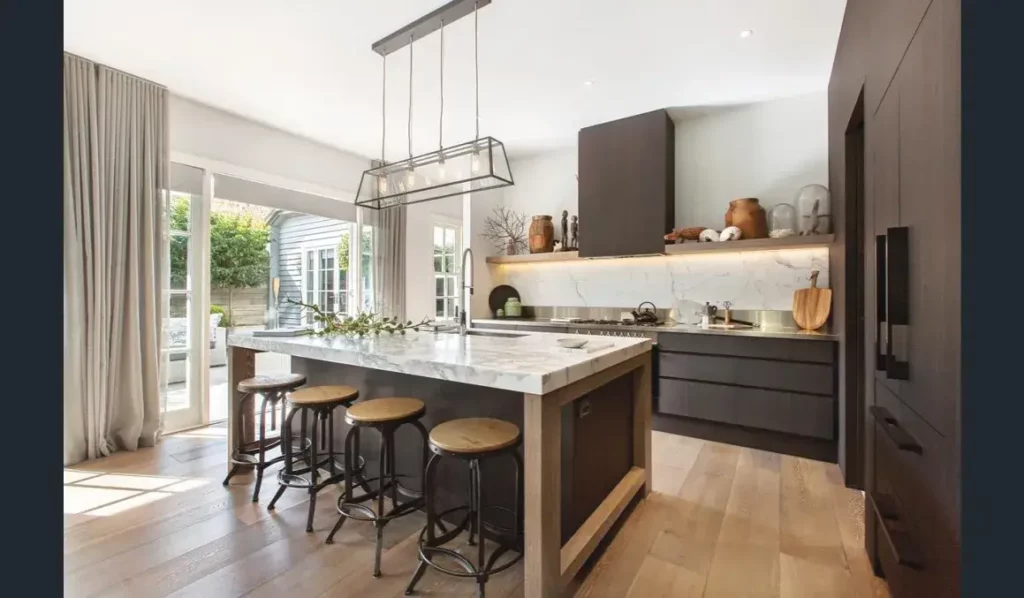
The kitchen is the room most homeowners spend the longest thinking about and, all too often, the one they feel most uncertain about once it is done. For those exploring kitchen interior design in Melbourne, the most common question is not which style to choose but how to make a choice that will still feel right in five or ten years. Trends move quickly, and what looks fresh today can feel dated surprisingly fast. Working with a skilled interior designer helps homeowners cut through the noise and make decisions grounded in proportion, materiality, and the way the kitchen actually needs to function, rather than what happens to be popular on social media this season.
Why kitchen design decisions are harder to reverse than any other room
There is a reason kitchen renovations sit at the top of the anxiety list for most homeowners. Unlike a living room, where a new sofa or a fresh coat of paint can shift the atmosphere entirely, the kitchen is structurally committed in ways that are expensive and disruptive to undo. The layout, the cabinetry, the benchtop, the splashback, the plumbing and electrical positioning: these are decisions that, once made, tend to stay made for a long time.
This is not a reason to feel paralysed. It is a reason to design deliberately from the outset, prioritising decisions that create a strong foundation rather than chasing a particular look. The kitchens that wear best over time are not necessarily the ones with the most dramatic design moments. They are the ones where the fundamental decisions, layout, proportion, material quality, were made carefully and without compromise.
The good news is that a kitchen designed with genuine longevity in mind is not a static thing. The right foundational choices create a space that evolves gracefully through small updates, new pendants, different bar stools, fresh styling, rather than one that eventually demands wholesale replacement because the core decisions have dated.
What separates timeless kitchen design from design that dates
It is worth being honest about what tends to make kitchens date. The answer is almost always specific to a particular moment: a finish that was everywhere for eighteen months and then disappeared, a hardware style that became over-saturated, a colour that was exciting and then suddenly tired. The kitchens that avoid this trap are not the ones that refused to have a point of view. They are the ones whose point of view was grounded in something more durable than trend.
Proportion is one of the most reliable indicators of a kitchen that will age well. A kitchen where the upper cabinetry sits at the right height, where the island is scaled correctly to the room, where there is a considered relationship between open and closed storage, tends to feel resolved in a way that transcends the particular moment it was designed in. It is difficult to put your finger on exactly why, but you feel it immediately when you walk in.
Materiality matters in a similar way. Kitchens that use genuine materials, stone with movement and character, timber with grain and warmth, a plaster wall that catches light softly, tend to improve with age rather than simply endure it. The material reads as itself rather than as a substitute for something else, and that authenticity carries a visual weight that synthetic alternatives, however convincing initially, rarely sustain over years of daily use.
Restraint, finally, is the quality most consistently present in kitchen design that holds its appeal. Not minimalism for its own sake, but a confidence about what to include and what to leave out. The most enduring kitchens tend to be quieter than the ones that date quickly. They have fewer things competing for attention, and the things that are there are worth the attention they receive.
Choosing a layout that works for the long term
Of all the decisions in a kitchen design, layout has the greatest influence on daily life. A kitchen can be visually beautiful and genuinely unpleasant to cook in. It can be modest in its finishes and a genuine pleasure to work in every day. The layout is the reason, and it deserves more deliberation than almost any other element of the design process.
The main layout options each suit different spaces and different patterns of use. A galley kitchen works exceptionally well in a corridor space, keeping the working zone efficient and contained. An L-shape offers flexibility for open-plan living and works well when there is a natural corner to anchor the kitchen within a larger room. A U-shape provides maximum storage and bench space and suits households that cook seriously and frequently. An island layout, the most requested in Melbourne renovations currently, works best when there is genuinely enough space to circulate around it comfortably, a consideration that is often underestimated in the planning stages.
Whatever the layout, the relationship between the sink, the fridge, and the cooktop, the working triangle, remains the most reliable guide to whether a kitchen will function well. Disrupting this relationship in favour of a particular aesthetic tends to produce kitchens that feel frustrating to use regardless of how they photograph.
Melbourne homes, with their strong indoor-outdoor culture and love of informal entertaining, often benefit most from layouts that create a natural connection between the kitchen and outdoor living areas. A kitchen designed to open towards a deck or garden, with easy sightlines and a thoughtful relationship between indoor and outdoor zones, suits the way most Melbourne households actually want to live far better than one that treats the kitchen as a self-contained room.
Cabinetry: the foundation of everything
Cabinetry is the single largest visual element of any kitchen and the element that most directly determines whether the space reads as considered or confused. It also represents the largest portion of most kitchen budgets, which makes the decisions around it particularly consequential.
Door profile is the first and most important cabinetry decision. Heavily detailed profiles, with applied mouldings, complex routed edges, or ornate hardware cutouts, tend to date more quickly than simpler, cleaner profiles because the detail is specific to a particular moment in design. A shaker profile has remained relevant precisely because it is simple enough to read as classic without being so plain as to feel blank. A flat slab profile in a quality paint or laminate finish can be equally enduring, provided the colour and finish are chosen with care.
The choice between painted and timber cabinetry is one that deserves honest consideration. Painted cabinetry offers flexibility, it can be refreshed more easily than timber if tastes shift, and it suits a wider range of colour palettes and material combinations. Timber cabinetry, particularly in a quarter-sawn or rift-sawn grain, brings warmth and character that painted finishes cannot entirely replicate, and it tends to develop a patina over time that feels richer rather than worn.
Handle choice is a detail that is consistently underestimated. A handle influences not only the feel of the cabinetry in daily use but also how the kitchen reads stylistically at a glance. Integrated channels or push-to-open mechanisms create a cleaner, more contemporary reading. A simple bar handle in a considered finish adds a quiet material note without dominating. A more decorative handle brings character but commits more strongly to a particular aesthetic. The most durable choice is usually the simplest one executed well, in a finish that is not at the peak of its trend cycle.
Benchtop materials that age beautifully
The benchtop is the surface that will receive more daily contact than any other element of the kitchen, and choosing it involves balancing aesthetics, practicality, maintenance, and longevity in a way that no other material decision quite replicates.
Natural stone
Engineered stone
Timber
Concrete and other surfaces
Colour palettes for kitchens that endure
Colour is where many kitchen renovations date most visibly, and it is also the area where homeowners most often seek reassurance that a bold choice will not become a regret. The honest answer is that the kitchens which age least well are almost always the ones that committed most heavily to a colour that had a strong cultural moment and then passed.
This does not mean that colour has no place in a kitchen designed for longevity. It means that colour decisions benefit from being made with some awareness of where the choice sits on the trend cycle, and with a preference for palettes that have a longer cultural history than those that are peaking right now. Warm whites, soft stone tones, quiet greens and blues with grey in them, deep charcoals, and nature-derived neutrals with genuine warmth have all demonstrated a durability that more saturated, fashion-forward colours tend not to.
The more reliable approach is to introduce colour through elements that are easier and less expensive to update than cabinetry. A splashback tile in a considered colour or pattern can be changed. Bar stools can be reupholstered or replaced. Pendants can be swapped. The cabinetry and benchtop are the foundation, and foundations tend to serve best when they are calm enough to support change rather than committed enough to resist it.
Melbourne’s light varies considerably between orientations, and this has a meaningful influence on how colour reads within a kitchen. A tone that feels warm and grounded in a north-facing room can feel cool and flat in a south-facing one. A colour selected from a paint chip under artificial light often reads quite differently under the quality of natural light specific to a particular room. This is one of the areas where local knowledge, and the experience of having seen colours behave across many different Melbourne homes, genuinely changes the quality of the advice available.
Hardware, fixtures, and the details that date quickly
If you want to understand which decade a kitchen was designed in, look at the hardware and fixtures. These are the elements that most reliably signal their era, because they are the ones most directly influenced by the finish trends that dominate at any given moment. The challenge is that finish trends move in relatively short cycles, and what reads as current and considered today can feel conspicuously dated within five years.
This does not mean avoiding considered hardware choices. It means being thoughtful about which choices are trend-sensitive and which have a longer cultural lifespan. Brushed nickel and satin chrome have demonstrated the kind of durability that suggests they will continue to feel relevant. Matte black had an extended moment across Melbourne interiors and is beginning to reach the saturation point that tends to precede dating. Unlacquered brass and aged bronze, used selectively, bring warmth and material authenticity that tends to age into rather than out of a kitchen.
Tapware and sink selection receive less deliberation than they deserve. The tap is one of the most-touched elements in any kitchen, and its scale, profile, and finish have a disproportionate influence on how the space reads at close range. A tap selected primarily for its finish rather than its proportion and quality tends to show both decisions over time. Investing in tapware from a maker whose products are designed to last, both in construction and in aesthetic, is consistently worthwhile.
The broader principle applies across all detail decisions. Spending more on fewer, better-specified elements consistently produces a better result than spreading budget across many smaller decorative additions. A kitchen with four or five genuinely excellent details will always feel more resolved than one with fifteen adequate ones.
Appliance integration and the case for restraint
One of the most common reasons kitchens feel busy and visually unsettled is appliance proliferation. The benchtops carry a toaster, a kettle, a coffee machine, a stand mixer, and various smaller devices, each in a slightly different finish and scale, creating a visual accumulation that no amount of beautiful cabinetry can entirely resolve.
The most enduring kitchens are those where the functional elements have been thoughtfully resolved rather than simply accommodated. This begins with honest planning: understanding which appliances are genuinely used daily versus which are used occasionally and could live in a pantry or larder, and designing the storage around that reality rather than around an idealised version of it.
Integrated appliances, where the refrigerator and dishwasher are concealed behind cabinetry panels, make a significant visual difference to the overall composition of the kitchen. The eye reads a continuous run of cabinetry rather than a series of different appliance finishes interrupting it, and the result is a kitchen that feels considerably calmer and more deliberate. Where budget allows for integration, it is almost always worth prioritising.
A well-designed pantry or larder is one of the most undervalued elements of kitchen planning. A pantry that resolves the storage of small appliances, dry goods, and the inevitable accumulation of kitchen life keeps the main kitchen surfaces clear and functional, and it makes the kitchen easier to maintain as a calm, enjoyable space over time.
Lighting in kitchen design
Kitchen lighting is consistently one of the most underinvested areas of the design process, and consistently one of the most transformative when it is done well. Most kitchens are designed with adequate task lighting and little else, which means they function well enough under artificial light but feel flat and uninspiring outside of that very specific condition.
A kitchen that functions beautifully across different times of day and different occasions requires layers of light. Task lighting, typically under-cabinet LED strips or well-positioned downlights, ensures the working surfaces are properly illuminated for cooking. Ambient lighting, softer and more diffuse, makes the room feel warm and liveable outside of cooking hours. Decorative lighting, most often pendant lights over an island or dining table, contributes to the atmosphere and adds a material note to the space.
Pendant selection over an island is a decision that deserves more care than it typically receives. The scale, the height at which the pendants hang, and their relationship to the proportions of the island and the room all matter considerably. A pendant that is too small reads as an afterthought. One that hangs too high loses its intimacy. Two pendants that are spaced incorrectly create visual tension rather than resolution. Getting this right makes a meaningful difference to how the kitchen feels, and it is the kind of detail that benefits from an experienced eye.
Dimming capability throughout the kitchen, across task, ambient, and decorative circuits independently, extends the versatility of the space considerably. A kitchen that can move from bright and functional at breakfast to warm and atmospheric for an evening dinner party, without any compromise to either, is a genuinely well-designed one.
Designing for the way Melbourne households actually live
The most enduring kitchens are almost always the ones designed around how a household actually lives rather than around an idealised version of how they think they might. This sounds straightforward, but it requires a particular kind of honesty in the brief-taking process, an openness to describing the real rhythms of the household rather than the aspirational ones.
Melbourne households tend to have a few things in common. Coffee is taken seriously, and the morning ritual around it deserves a thoughtfully resolved space rather than an afterthought on the end of the bench. Entertaining at home is frequent and tends to be informal, which means the kitchen needs to function beautifully while people are gathered in it rather than simply when they are not. Indoor-outdoor living is a genuine priority for most households, which influences both the layout and the orientation of the kitchen within the broader floor plan.
Storage, particularly for the well-stocked pantry that serious home cooks and families with children inevitably accumulate, is consistently underestimated in the planning stages. The breakfast bar positioning, the height of the island relative to the adults and children who will use it, the distance between the kitchen and the outdoor entertaining area, these are the practical considerations that determine whether a kitchen is genuinely enjoyable to live with or simply impressive to look at.
At Jane Gorman Decorators, the design process begins with understanding how a client actually uses their kitchen and what they find frustrating about their current one. Those answers shape every subsequent decision, from the layout to the material choices to the lighting plan, and they are why kitchens designed with that kind of care tend to feel more personal and more enduring than those designed from a template.
Bringing it all together with Jane Gorman Decorators
A kitchen renovation is one of the most significant investments a homeowner makes, and it deserves the kind of considered, personalised guidance that produces a result genuinely tailored to the household it is designed for rather than a version of what kitchens looked like at a particular moment in time.
The studio works with homeowners across Melbourne from the earliest stages of planning, helping to establish a clear brief, navigate the material decisions that have the most influence on longevity, and develop a design that feels cohesive, considered, and genuinely personal. The process is collaborative by nature, because the best kitchens are the ones where the homeowner’s way of living is as central to the design as any aesthetic intention.
Whether you are embarking on a full renovation, reconfiguring an existing space, or simply trying to bring more clarity and intention to a kitchen that has never quite felt right, we would love to hear about your project.
Frequently asked questions
How do I choose a kitchen style that will not date?
Is natural stone worth the maintenance in a Melbourne kitchen?
How much should I spend on kitchen lighting?
What is the most common kitchen design mistake?
How does Jane Gorman Decorators approach kitchen design?
The process begins with understanding how the household actually lives and what they find unsatisfying about their current kitchen. From there, the design develops around those realities, with material selections, layout decisions, and detail choices all made in service of a result that is genuinely tailored to the client rather than template-driven. The studio works across the full design process, from initial brief through to material selection, supplier coordination, and final styling, and takes the same care with a kitchen renovation as with any other room in the home.
A kitchen designed with genuine care for proportion, material quality, and the way you actually live will still feel right long after the trends it was designed alongside have moved on. Jane Gorman Decorators works closely with homeowners across Melbourne to create kitchens that are as functional as they are beautiful, and as personal as they are timeless. To discuss your kitchen project or upcoming renovation, book a design consultation with the studio today.