
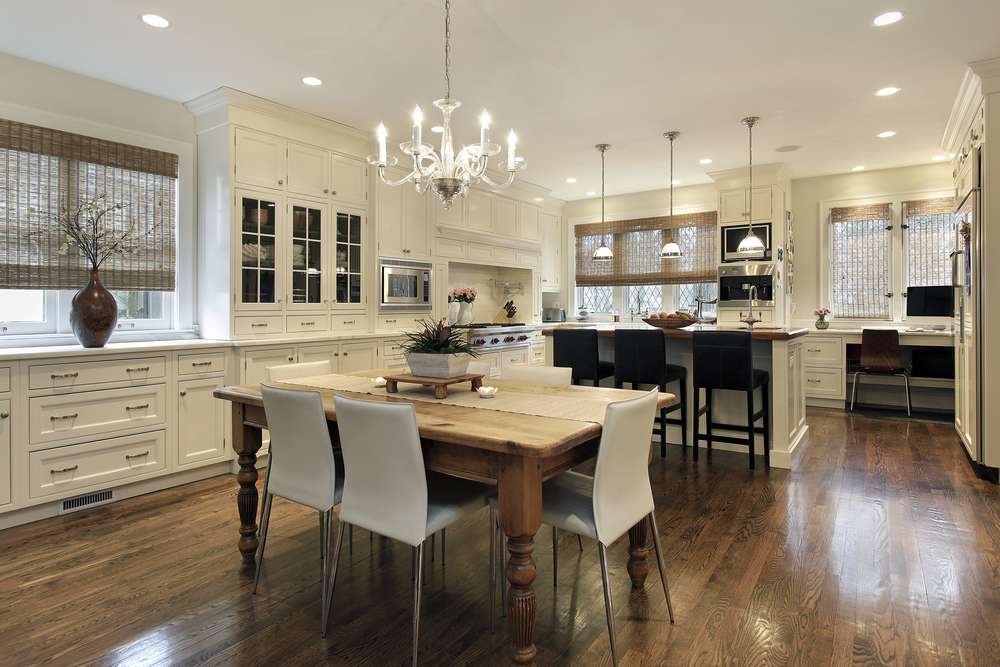
Most homeowners arrive at the idea of a kitchen renovation after a long period of quiet dissatisfaction. Something about the kitchen is not working, whether it is the layout, the look, the storage, or simply the way it makes them feel when they walk in every morning. The assumption, almost universally, is that fixing it means starting again. Rip it out. Start fresh. Spend significantly. But that assumption is worth questioning, because a great many kitchens that feel tired, dysfunctional, or simply wrong do not actually need a rebuild. What they need is a kitchen designer to look at them with fresh eyes and ask the more useful question: what specifically is not working, and what is the least disruptive way to resolve it?
Why the instinct to rebuild is not always the right one
There is something psychologically compelling about the idea of starting from scratch. It feels decisive. It promises a clean break from everything that has been bothering you. And for kitchens that are genuinely beyond redemption, structurally compromised, hopelessly proportioned, or so worn that no amount of surface work would make a meaningful difference, a full renovation is the right answer.
But kitchens that fall into that category are rarer than the renovation industry might suggest. Many more kitchens have perfectly sound bones, a reasonable layout, solid cabinetry, good spatial proportions, and a set of problems that are almost entirely surface-level or cosmetic. In these cases, rebuilding is not just unnecessary. It is actively wasteful, demolishing and disposing of materials and cabinetry that would have continued to serve perfectly well for years, in exchange for the psychological satisfaction of a clean slate.
The more considered approach, and the one that consistently produces better outcomes for the investment involved, is to diagnose the kitchen precisely before deciding how to treat it. What is actually wrong? What would genuinely improve if it changed? And what, if you are honest, has been perfectly fine all along?
Understanding what a redesign can and cannot do
A redesign works within the existing structure of the kitchen. It does not move plumbing, relocate the cooktop, or reconfigure the fundamental layout. What it does, when done well, is transform the experience of the kitchen through changes to the elements that most directly influence how the space looks and feels, without touching the things that work.
The range of what is achievable within a redesign is broader than most homeowners initially appreciate. New cabinetry doors on existing carcasses can entirely change the character of the kitchen. A new benchtop in a material with genuine warmth and presence can make a previously flat and uninspiring space feel considered and alive. New hardware, tapware, a splashback, pendants, and a fresh approach to styling can shift the atmosphere of a kitchen so completely that the underlying structure becomes almost invisible.
What a redesign cannot do is fix a layout that genuinely does not work. If the kitchen is difficult to move around in, if the working triangle is fundamentally broken, if there is not enough bench space for the household’s actual cooking needs, those are structural problems that require structural solutions. The skill is in distinguishing between the two, because homeowners in the middle of their dissatisfaction are not always well placed to make that distinction clearly.
The questions worth asking before committing to anything
Is the layout the problem?
Is it the look?
Is it the storage?
Is it the quality of the materials?
What a thoughtful redesign actually involves
A redesign is not a list of cheap fixes applied without a plan. Done well, it is a coherent design exercise that identifies the changes with the highest impact on the overall experience of the kitchen and executes them with as much care and intention as a full renovation would bring to every element.
The process begins with an honest audit of the existing kitchen. What is structurally sound and worth keeping? What is cosmetically tired but functionally fine? What is genuinely not working and needs to change? The answers to these questions shape a scope of works that is specific to the kitchen rather than generic, and that specificity is what makes the investment efficient.
From there, the design work focuses on the elements that most directly influence the character of the space. Cabinetry finish and profile. Benchtop material. Splashback. Hardware and tapware. Lighting, which is consistently one of the highest-impact and most underinvested elements of any kitchen. And finally, styling, the layering of objects, textiles, plants, and considered details that transforms a functional kitchen into one that feels genuinely lived in and personal.
Each of these decisions is made in relation to the others, because the kitchen that results from a series of independent choices, each made in isolation, rarely feels as resolved as one where the decisions were made as part of a coherent whole. This is where working with a designer rather than managing the process yourself makes the most consistent difference.
Cabinetry: when to reface, when to replace, when to leave alone
Cabinetry is usually the element that determines whether a redesign is viable or whether a full renovation is genuinely necessary. If the existing cabinetry carcasses are structurally sound, level, and well-fixed, there is almost always an argument for working with them rather than replacing them. New doors in a considered profile and finish, combined with new internal hardware, can transform the visual reading of the kitchen entirely while preserving the structural investment that the existing cabinetry represents.
Refacing, applying new door fronts to existing carcasses, is a well-established approach that works well when the carcasses are in good condition and the existing layout is sound. It requires less time, less waste, and considerably less cost than a full replacement, and the result, when the new doors are well specified, is visually indistinguishable from a full rebuild to anyone who did not know the kitchen before.
Replacement is warranted when the carcasses themselves are compromised, when the existing configuration genuinely does not serve the household’s storage needs, or when the layout needs to change in a way that requires the cabinetry to be repositioned. These situations are less common than homeowners tend to assume, but they do exist, and it is worth being honest about whether the existing cabinetry is genuinely sound before deciding to retain it.
The transformative power of a new benchtop
If there is a single change that has the most disproportionate impact on how a kitchen looks and feels, it is the benchtop. The bench is the surface that the eye moves to first and returns to most often. It sets the material tone for the entire kitchen.
And in a great many kitchens, it is the element that is most obviously wrong, not because of any structural failure but because it was chosen quickly, or cheaply, or without enough thought about how it would read alongside everything else.
Replacing the benchtop while retaining the existing cabinetry is a very common and very effective redesign intervention. A laminate bench replaced with a stone surface, or an engineered stone bench replaced with a material that has more warmth and movement, changes the character of the kitchen in a way that is immediately legible to anyone who walks into the room. It is the kind of change that makes people ask whether you renovated the kitchen, when in fact you changed one element.
The choice of material matters enormously here. A benchtop selected for its visual appeal in isolation, without reference to the existing cabinetry colour, the floor finish, the lighting quality, or the overall palette of the kitchen, can create more problems than it solves. The benchtop needs to be chosen as part of a coherent material story, which is another reason the redesign process benefits from a designer’s eye rather than a series of independent decisions made at a stone merchant’s showroom.
Lighting as a redesign lever
Lighting is the element most consistently underestimated in its influence on how a kitchen feels, and it is also one of the most accessible redesign levers available. A kitchen that functions well and has reasonable finishes but is lit poorly will always feel flat, uninspiring, and slightly wrong in a way that is difficult to articulate but impossible to ignore.
New pendant lighting over an island or dining table can shift the atmosphere of a kitchen significantly. The scale of the pendant, its material quality, and the warmth of the light it casts all contribute to an experience that goes well beyond mere illumination. A pendant chosen with care, at the right scale and height, does something that no amount of new cabinetry can do: it creates an anchor point for the room and makes the space feel deliberate.
Under-cabinet lighting, dimmer switches, and the addition of a warmer ambient light source in a kitchen that previously relied entirely on downlights are all changes that can be made without touching anything structural. Their impact on the evening experience of the kitchen in particular is transformative, and they represent genuinely good value relative to their cost.
Styling and the finishing layer
The final and most underestimated element of any kitchen redesign is styling. The way a kitchen is styled, what sits on the benchtops, what hangs on the walls, what lives on the open shelves, how the practical objects of kitchen life are organised and presented, has an enormous influence on whether the space feels considered or chaotic, personal or generic.
This is not about decorating for a photoshoot. It is about making deliberate choices about the objects that live in the kitchen and how they relate to each other and to the broader material palette of the space. A kitchen with beautiful bones but poor styling often fails to deliver the feeling its architecture promises. A kitchen with modest finishes but genuinely thoughtful styling can feel warm, personal, and resolved in a way that is deeply satisfying to live in.
The styling layer is also the one most amenable to evolution over time. Objects can be added, removed, or replaced as taste develops and as the household changes. This is precisely why it makes sense to invest in the structural and material elements of the kitchen for the long term, and to treat the styling layer as something that can be refreshed and refined as the years go by.
When Melbourne homeowners discover they needed less than they thought
One of the most common outcomes of an honest design conversation is the discovery that the kitchen the homeowner thought they needed to rebuild is actually a kitchen that needs to be properly seen and properly styled for the first time. Melbourne homes, particularly period properties in the inner suburbs, frequently have kitchens with excellent bones that have been fitted with materials and details that do not do justice to the space they occupy.
A kitchen in a Victorian terrace in Fitzroy or a federation home in Hawthorn often has proportions and architectural character that a full renovation would struggle to improve on. What it may lack is a material palette and a level of finish that speak to those proportions respectfully. Bringing those elements to the kitchen, through new cabinetry finishes, a considered benchtop, better lighting, and a coherent approach to styling, can unlock a kitchen that was always there but never quite realised.
The willingness to look carefully at what exists before deciding what to change is, in our experience, one of the most valuable things a designer brings to the process. It requires a different kind of eye than the one trained to imagine spaces from scratch, and it tends to produce outcomes that are not only more cost-effective but often more interesting, because they are in genuine conversation with the character of the home rather than imposed upon it.
Working with Jane Gorman Decorators on a kitchen redesign
Jane Gorman works with homeowners across Melbourne on kitchen projects of every scale, from full renovations where the brief genuinely requires a rebuild to focused redesigns where a more surgical approach produces a better result for a fraction of the cost and disruption. The process always begins in the same place: an honest conversation about what is actually wrong with the existing kitchen and what the household genuinely needs from it.
From there, the scope of works is shaped around the diagnosis rather than a predetermined idea of what a kitchen project should involve. Sometimes that means a full renovation. More often than homeowners expect, it means something considerably more targeted, executed with the same level of care and design intention that a full rebuild would receive.
If you have been living with a kitchen that does not feel right and are not sure whether it needs to be rebuilt or redesigned, that conversation is exactly where we would suggest starting.
Frequently asked questions
How do I know if my kitchen needs a full renovation or a redesign?
Can new cabinetry doors make that much difference to an existing kitchen?
Is it worth replacing just the benchtop?
How long does a kitchen redesign typically take compared to a full renovation?
What does Jane Gorman Decorators charge for a kitchen redesign consultation?
A kitchen that feels wrong does not always need to be rebuilt. It needs to be understood. Jane Gorman Decorators works with homeowners across Melbourne to ask the right questions before reaching for the sledgehammer, and to find the most considered, most effective path to a kitchen that finally feels like it belongs to the home it sits within. To discuss your kitchen or begin a redesign conversation, book a consultation with the studio today.