
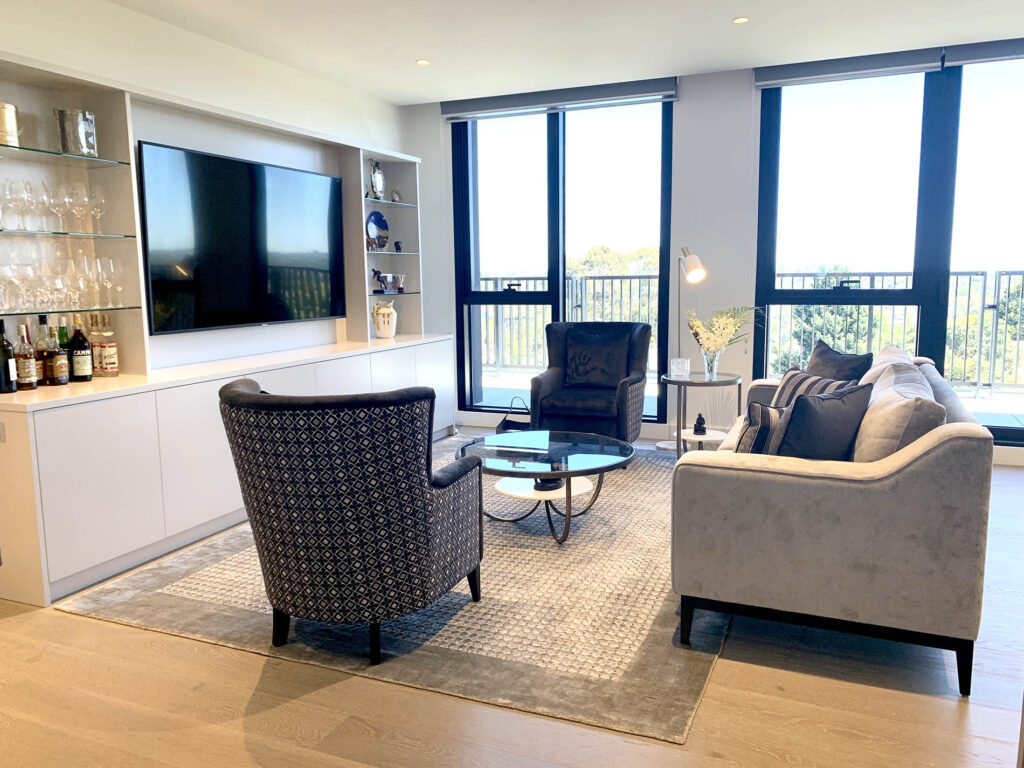
Every apartment renovation starts with the same underlying question, even if it’s never asked out loud: are you designing this home for yourself, or for the next owner? Apartment design for resale and design for long-term living look similar on the surface — both want a beautiful, functional space — but the decisions underneath are often completely different. Getting this distinction right early can save you thousands of dollars and months of second-guessing.
Two Very Different Design Briefs
When we sit down with a client who’s renovating to sell, the brief is almost always about broad appeal. Neutral palettes, durable finishes, and layouts that photograph well and read as move-in ready to a wide range of buyers. When the brief is ‘we’re staying for the next fifteen years,’ the conversation shifts entirely — towards how a family actually moves through a kitchen at 7am, where the reading chair should catch the afternoon light, and which finishes will still feel personal a decade from now. Neither approach is wrong. They’re simply solving different problems.
Designing to Sell: What Buyers Actually Respond To
Buyers make emotional decisions in the first ninety seconds of walking through a door, then justify them logically afterwards. That means apartment design for resale needs to prioritise first impressions — natural light, a sense of space, and a cohesive palette that lets buyers imagine their own life in the rooms rather than yours. Over-personalised choices, however beautiful, can actually work against you here.
- Keep wall colours neutral and warm rather than stark white or heavily saturated — buyers respond to warmth, not blankness.
- Invest in kitchen and bathroom finishes first, as these rooms carry the most weight in a buyer’s perception of value.
- Maximise perceived space with mirrors, lighter flooring, and furniture scaled to the room rather than oversized statement pieces.
- Choose durable, timeless materials over trend-led finishes that may date quickly or divide opinion.
- Style for lifestyle, not just decor — a set dining table and inviting living zone help buyers picture themselves at home.
Designing to Live In: Comfort Over Consensus
If you’re not selling any time soon, the calculus changes completely. This is where our apartment interior design work tends to get personal — built-in storage solved around how you actually live, a colour palette drawn from what genuinely makes you feel calm, and joinery designed to last well beyond the current trend cycle. We recently worked on two Melbourne apartment projects that illustrate this beautifully: one a compact CBD apartment designed purely for its owner’s daily comfort, the other a family apartment balancing everyday practicality with long-term flexibility.
Small Spaces, Big Decisions
Apartment living, more than any other property type, magnifies the impact of every decision — a poorly placed doorway or an underused corner is felt daily. In both of those recent apartment projects, our focus was less about following a trend and more about designing storage, lighting and flow that genuinely suited how our clients lived, worked and relaxed within a smaller footprint.
Finding the Middle Ground (When You're Not Sure Which Path You're On)
Plenty of our clients sit somewhere in between — they want to enjoy their apartment for the next few years but know it’s likely to go on the market eventually. In these cases, we recommend investing in the elements that hold value regardless of who lives there: quality joinery, well-considered lighting, and a considered material palette. Save the highly personal, trend-forward choices for soft furnishings and accessories, which are easy and inexpensive to change later without compromising the bones of the design.
It’s also worth thinking about resale value as insurance, even if selling isn’t on your immediate horizon. Life circumstances change, and a well-designed apartment that happens to also appeal broadly will always be easier to sell, lease, or hand down than one built entirely around a single, highly specific taste. This doesn’t mean compromising on what you love — it means being thoughtful about which decisions are genuinely permanent and which can evolve.
Mistakes We See Again and Again
Across hundreds of apartment projects, a handful of avoidable mistakes come up more than any other — usually because they weren’t considered early enough in the process.
- Renovating for resale but choosing finishes so bold or personal they narrow the buyer pool rather than widen it.
- Renovating to live in but under-investing in storage, which is felt every single day in an apartment.
- Skipping professional advice on layout, only to discover mid-project that a wall or window can’t move as hoped.
- Choosing trend-led fixtures for a resale property that will look dated well before the apartment goes to market.
- Underestimating how much natural light and sightlines matter to both buyers and everyday occupants alike.
How Professional Design Helps Either Way
Whichever path you’re on, an experienced eye can see further down the track than most homeowners can on their own — anticipating how a layout will be perceived by future buyers, or how a family’s needs might shift over the coming years. That foresight is often the difference between an apartment renovation that pays off, and one that quietly becomes a source of regret.
How to Brief Your Designer Clearly
One of the simplest ways to get better results, regardless of which path you’re on, is to be upfront with your designer about your intentions from the very first conversation. Telling us clearly whether you’re renovating to sell within the next year, to live in indefinitely, or somewhere in between shapes every recommendation that follows — from material selection through to how much we invest in bespoke joinery versus more flexible, replaceable elements.
It’s also worth revisiting that intention partway through a longer project, since circumstances do change. A couple who begin a renovation intending to stay long-term might, eighteen months later, be considering a move for work or family reasons — and a good design partner should be able to adapt the brief sensibly without unravelling decisions already made.
Let's Talk About Your Apartment
Whether you’re preparing to list or settling in for the long haul, the right design decisions from day one make all the difference. With more than 30 years of experience across Melbourne apartments, Jane Gorman and her team can help you work out exactly which path suits your circumstances — and design accordingly. Get in touch to start the conversation, or browse our portfolio for more examples of our apartment work.